The View Lot Premium: What Ridgewood Acreage May Cost to Insure in 2026
September 24, 2026
September 24, 2026
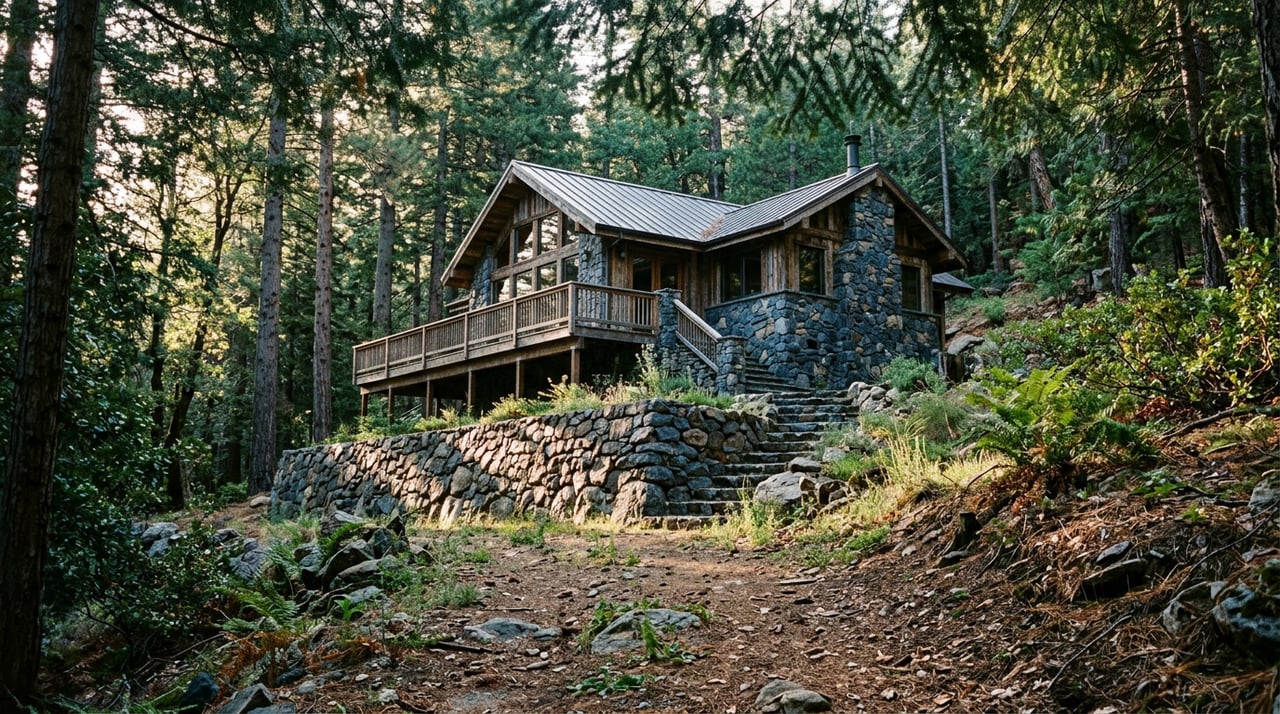
A Ridgewood listing sells on the same three words every time: space, privacy, views. Two to twenty acres of oak, cedar, and pine, sited high enough to sit "above the valley fog and below the snow level," as more than one listing description in the neighborhood likes to put it. That elevation and tree cover are exactly what a buyer is paying for. They are also, unglamorously, the two biggest factors an insurance underwriter uses to price the wildfire portion of a homeowners policy. The number on the for-sale sign and the number on the first insurance renewal are answering two different questions, and Oakview Insurance reports that right now the gap between them is widening on a fixed date: October 15, 2026.
That is when the California Department of Insurance's approved 29.1 percent average rate increase takes effect for the California FAIR Plan, the state's insurer of last resort. If you are comparing a Ridgewood acreage parcel to a smaller in-town lot this fall, the list price tells you almost nothing about which one costs more to actually own.
Start with the part of this that is not a projection or an average, but a requirement. According to the Office of the State Fire Marshal, since July 1, 2021, California law has required sellers of property in a High or Very High Fire Hazard Severity Zone to provide documentation of a compliant defensible space inspection at the point of sale. This is not a suggestion buried in a disclosure packet. It is paperwork tied to the transaction itself, and large-lot foothill neighborhoods with heavy natural vegetation are exactly the property type most likely to fall inside those zones.
For a Ridgewood seller, that means the defensible space work, the cleared brush, the trimmed limbs, the fuel break around outbuildings, needs to already exist and already be documented before a buyer's lender will feel comfortable moving toward closing. For a buyer, it means the acreage that looked like a clean, private lot in photos may come with a compliance history worth asking about directly, not assuming.
Here is the mechanism underneath the sticker shock. A FAIR Plan premium is calculated primarily off two inputs: the total insured value of the dwelling, and a brush score built from CAL FIRE's Fire Hazard Severity Zone mapping, which weighs vegetation density, slope, and canopy over a 30 to 50 year outlook. Doubling the dwelling's insured value roughly doubles the premium. Moving from a cleared, low-brush lot to a heavily wooded one moves the multiplier the other direction, independent of the house itself.
The statewide average FAIR Plan premium currently runs $3,000 to $3,200 a year. In Calaveras and Tuolumne counties specifically, typical premiums for high-exposure properties run $6,000 to $15,000 a year. A $1 million dwelling in a foothill county commonly lands between $5,000 and $9,000 annually on FAIR Plan coverage alone, and because FAIR Plan policies only cover fire, lightning, and smoke, most owners layer a separate Difference in Conditions policy on top to cover liability, water damage, and theft. That DIC wrap typically adds another 25 to 60 percent on top of the FAIR Plan premium itself.
| Cost component | Statewide average (2026) | Calaveras and Tuolumne foothill range |
|---|---|---|
| FAIR Plan dwelling premium | $3,000 to $3,200 per year | $6,000 to $15,000 per year |
| DIC wrap (fills liability, water, theft gaps) | Adds 25 to 60 percent on top | Same structure applies |
| October 15, 2026 rate action | +29.1 percent average | Likely at or above average in higher-exposure zones |
That last row is not theoretical. The Department of Insurance's own approval notes that while 29.1 percent is the statewide average, policyholders with significant wildfire exposure could see the wildfire portion of their bill closer to doubling. A multi-acre, tree-covered lot is precisely the profile that lands on the higher end of that range, not the lower one.
None of this is happening in the abstract for Tuolumne County. A Department of Insurance fact sheet ranking counties by the share of structures in high or very high wildfire risk zones puts Tuolumne first in the state, ahead of Trinity, Nevada, Mariposa, and every other county on the list. A 2023 survey conducted by the county's own Realtor association found close to a third of Tuolumne County homeowners were already relying on the FAIR Plan rather than a standard admitted carrier, a reliance rate the survey's presenters described to the Board of Supervisors as the highest in the state at that time.
The county has also had two named wildfire events in the past year that triggered statewide insurance protections reaching into Tuolumne. According to the California Department of Insurance, the TCU Lightning Complex Fire in September 2025 prompted a mandatory one-year moratorium on cancellations and non-renewals across Calaveras and Tuolumne counties. Eleven months later, the Gann Fire in neighboring Calaveras County burned through more than 10,000 acres near Valley Springs; the California Department of Insurance says Commissioner Ricardo Lara extended a similar protection to more than 64,000 policyholders across Calaveras, San Joaquin, Amador, Tuolumne, and Stanislaus counties.
"This moratorium offers tens of thousands of Californians a reprieve from the threat of losing their insurance coverage after going through a wildfire emergency."
That is Lara's own framing of what the moratorium does. It is worth reading closely, because it is a reprieve, not a fix. The moratorium pauses non-renewals for a year. It does nothing to the rate a policyholder pays when that year runs out, and it does nothing to soften the October 15 increase landing across the entire FAIR Plan book regardless of moratorium status.
The one part of this that a Ridgewood owner or buyer can act on directly is the FAIR Plan's wildfire hardening discount program, effective for policies dated November 15, 2025 or later. It offers up to twelve individual discounts across categories the program calls Immediate Surroundings and Structure, covering things like a noncombustible five-foot zone around the dwelling, ember-resistant vent screens, a Class A fire-rated roof, and outbuildings kept at least 30 feet from the main structure. Dwelling Fire policyholders who document all twelve measures can see up to 16.4 percent off the wildfire portion of their premium.
Because the discount applies only to the wildfire slice, rather than the whole policy, savings on a $9,000 annual premium depend on how much of the bill is attributable to wildfire risk; at the maximum 16.4 percent, the reduction could still be meaningful. It is also, according to several insurance guides reviewing the program, the same documentation trail that admitted carriers look for when deciding whether to write a policy for a property that currently has no option but FAIR Plan. A hardened, documented lot does double duty: it lowers the bill now and builds the case for leaving FAIR Plan later.
For sellers, this is worth treating as a marketing asset rather than a compliance chore. A Ridgewood listing that can show a buyer a current defensible space certification and a documented hardening file is answering the insurance question before it gets asked, at a moment when that question carries real weight in a buyer's monthly cost math.
Does every Ridgewood lot fall in a high fire hazard zone? Not automatically. Fire Hazard Severity Zone designations are parcel-specific and depend on slope, vegetation, and terrain, which vary even within one subdivision. CAL FIRE maintains a public zone viewer where a specific address can be checked before an offer goes in.
Can a buyer see FAIR Plan pricing before closing? Yes. The FAIR Plan Association publishes a premium estimator that returns a baseline quote from an address and basic dwelling details. It will not capture every hardening discount, but it gives a real starting number rather than a guess.
Does the wildfire hardening discount apply retroactively? No. It applies to policies dated November 15, 2025 or later. Existing policyholders need to contact their broker directly to have documented improvements reviewed and added at renewal.
The list price on a Ridgewood acreage parcel was never the whole picture, and this fall it is a smaller piece of the picture than it was a year ago. The privacy and the view are real. So is the annual bill that comes with insuring the vegetation that makes them possible, and so is the October 15 date that changes what that bill looks like for everyone currently on the FAIR Plan.
None of this replaces a conversation with a licensed insurance broker who can run an actual quote against a specific parcel. What it should replace is the habit of comparing two Sonora-area listings on price per square foot alone. If you are weighing a Ridgewood lot against something closer to town, the honest comparison includes both numbers.
If you want to see how that comparison plays out on a specific property, or you are getting a Ridgewood home ready to list and want the defensible space paperwork in order before a buyer asks for it, Tuolumne Homes can walk through both sides with you. Start with a free home valuation and bring the insurance question into the conversation from day one.
This article is general information, not legal, tax or financial advice. Consult a qualified professional about your situation.
Stay up to date on the latest real estate trends.

Get assistance in determining current property value, crafting a competitive offer, writing and negotiating a contract, and much more. Contact me today.