
The Ditch Easement a Lambert Lake Title Report Might Never Show You
September 17, 2026
September 17, 2026
Ask most buyers what "Lambert Lake" means and they will describe a subdivision: winding roads off Phoenix Lake Road, acreage lots, a name on a sign. Fewer know that Lambert Lake is also an actual small lake, one that local birders list as a good place to spot waterfowl and one they cannot simply walk up to, because it sits on private grounds that require permission to enter. The name on the real estate listing and the water body it references are not quite the same thing, and that gap matters more than it looks like it should once you understand what else runs through this part of the county.
Underneath the subdivision name is a piece of infrastructure that predates every house on it by roughly a century and a half: the Tuolumne Ditch System, a network of open channels, flumes, pipes and tunnels first dug by gold miners in the early 1850s to move water into Sonora and Jamestown. Tuolumne Utilities District now owns and operates more than 70 miles of that system downstream of PG&E's Tuolumne Main Canal, and the district's own service maps place the Lambert Lake area inside a zone it labels Cuesta-Lambert Lake, grouped with Apple Valley, Phoenix Lake, Wards Ferry and a handful of other Sonora-area communities. That grouping is not marketing language. It is how the district tracks which properties sit inside the historic ditch network's footprint.
Here is the part that should change how you read a title report before closing on a property in this corridor: the right the district holds to be on that land does not come from a recorded deed. It comes from prescription and from two Acts of Congress, dated July 26, 1866 and July 9, 1870, which the district cites as the legal basis for its right of ingress and egress along the ditches for inspection, operation, cleaning, maintenance, repair, reconstruction and improvement. TUD's own ditch position statement goes further, stating plainly that a right of easement by prescription has been established on all lands where the ditch system sits, including land that was privately owned at the time the ditches were first built.
A title company searching a Lambert Lake parcel is looking for what is recorded: deeds, recorded easements, liens, anything that shows up in the county's official record. A prescriptive easement does not need to show up there to be enforceable. It exists because of long, continuous, unchallenged use, not because someone filed paperwork. That is precisely why California sellers are required to disclose known easements to buyers even when a formal title search comes back clean. The obligation sits on what the seller actually knows, not on what the recorder's office happens to have on file.
This is not a Lambert Lake quirk invented by an overcautious title officer. It is how easement law generally treats old, unrecorded rights of use, and it is why standard title insurance can leave a gap around exactly this kind of claim. If a ditch alignment from the 1850s crosses the back third of a lot, a buyer relying only on a clean title report has no guarantee that alignment will surface before closing. The only reliable way to find out is to ask the district directly and, if the lot has any grading, fencing, or building planned near the rear or side yard, to bring in a licensed surveyor before writing an offer that assumes the whole parcel is unencumbered.
Plenty of Tuolumne County parcels sit outside any historic ditch alignment entirely. The reason Lambert Lake deserves its own conversation is the district's own naming convention. Grouping this specific area under Cuesta-Lambert Lake in its service materials is the clearest signal available that TUD considers this ground part of the same infrastructure network as Phoenix Lake and Wards Ferry, areas with long-documented ditch presence going back to the mining era. It does not mean every lot on Lambert Lake Road has a ditch crossing it. It means the odds are high enough, and the consequences serious enough, that skipping the question is a bad bet.
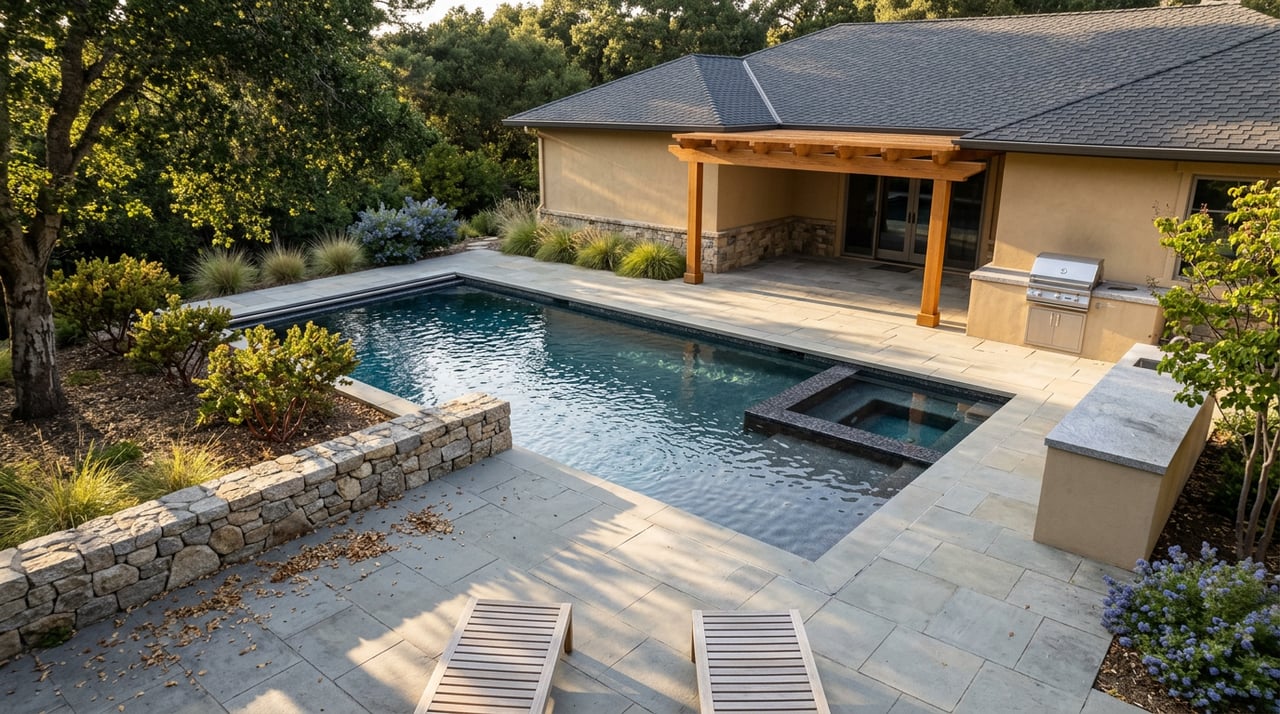
The consequences are not abstract. TUD's position statement is explicit that the district's access rights include the authority to require removal of anything that obstructs or hinders its maintenance, inspection, and repair work. A fence built across a ditch alignment, a shed placed over one, or a pool excavated too close to one can become the seller's problem to remove, not a cosmetic issue a buyer can quietly work around after closing.
If you are on either side of a transaction in the Lambert Lake or wider Cuesta-Lambert Lake area, a short list of steps closes most of this gap before it becomes a closing-day surprise.
None of this makes a Lambert Lake property a bad purchase. It makes it a property where the standard due diligence checklist needs one extra line item that a generic California closing process does not automatically include.
Does every property in Lambert Lake have a ditch easement on it? No. The district's zone naming ties the broader area to the historic ditch network, but that does not mean every parcel is crossed by an active alignment. It means the question is worth asking specifically, rather than assuming a clean title report has already answered it.
If my property gets its water from a well or a treated TUD connection, does that mean there's no ditch nearby? Not necessarily. Where a property gets its domestic water and whether a historic ditch easement crosses the land are two separate questions. A parcel can be fully on treated water service and still have an old ditch alignment running across a back corner.
Can the district really require me to remove a fence or shed? Its own position statement states that landowners cannot obstruct or install obstructions that hinder the district's access for maintenance, inspection, and repair. That is a real enforcement position, not a formality.
Who do I actually call to check before I close? Start with Tuolumne Utilities District directly, then loop in your title company and, if there is any construction planned near a rear or side yard, a licensed surveyor. Those three conversations, done before you remove a contingency, cover the gap a standard title search can leave open.
Understanding what sits underneath a listing, not just what the photos show, is the kind of groundwork that shapes a stronger offer or a cleaner sale. If you are weighing a move in the Lambert Lake area, or anywhere else in Tuolumne County, Tuolumne Homes can walk the specific parcel history with you before you are staring down a closing deadline. Start with a look at current Lambert Lake listings, review our buyer's guide or seller's guide for the fuller due diligence picture, or request a free home valuation to see where your property stands before you make your next move.
Stay up to date on the latest real estate trends.


Get assistance in determining current property value, crafting a competitive offer, writing and negotiating a contract, and much more. Contact me today.